Luban Oasis
Dragon’s Blood Resin – Socotra Island, Yemen | Dracaena cinnabari
Dragon’s Blood Resin – Socotra Island, Yemen | Dracaena cinnabari
Couldn't load pickup availability
Rare. Sacred. Ancient.
Harvested from one of the world’s most isolated archipelagos, this is Dragon’s Blood as it has existed for millennia — wild, unprocessed, and irreplaceable.
What Is Dragon’s Blood?
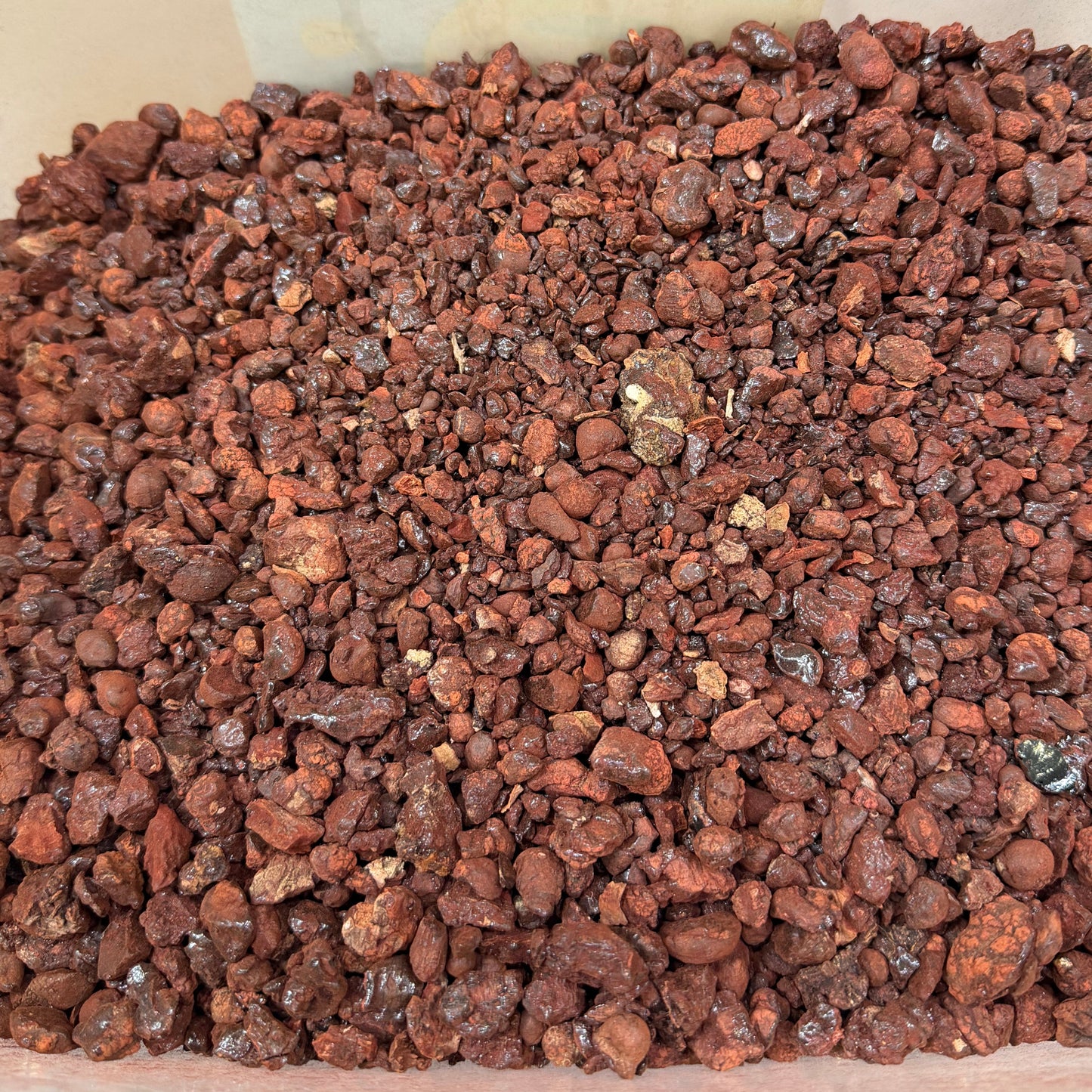
Dragon’s Blood resin is the deep crimson sap of Dracaena cinnabari, the iconic Dragon Blood Tree native exclusively to Socotra Island, Yemen — a UNESCO World Heritage Site often called the “Galápagos of the Indian Ocean.” When the bark is scored, the tree weeps a vivid blood-red resin that hardens into brilliant ruby-toned pieces, each one a fragment of one of the rarest botanical ecosystems on Earth.
Rarity & Origin
Dracaena cinnabari grows nowhere else on Earth in its wild form. Socotra’s extreme geographic isolation — cut off from mainland Arabia and Africa for millions of years — produced an evolutionary wonder: over a third of its plant species exist nowhere else on the planet.
The Dragon Blood Tree itself is endangered and protected. Harvest is strictly limited to naturally exuded resin and carefully managed tapping by local Socotri communities who have stewarded these trees for generations. Climate change, grazing pressure, and restricted access to the island make each batch increasingly difficult to source. What you hold is genuinely scarce.
Harvest & Processing
Local Socotri harvesters make shallow incisions in the bark of mature trees during the dry season. The resin bleeds out slowly, oxidizes, and is collected in its natural hardened form — no solvents, no additives, no processing. The resulting pieces range from translucent deep red to rich burgundy, sometimes with an almost luminescent quality when held to light.
Our resin is sourced through direct relationships with Yemeni traders and arrives in its raw, natural state.
Traditional & Modern Uses
Dragon’s Blood has been traded along the ancient incense routes for over 2,000 years. Its uses span cultures from the Arabian Peninsula to Ancient Rome, Medieval Europe, and traditional Chinese medicine:
• Incense & Fumigation — burn on charcoal for a warm, earthy, slightly sweet smoke; used in spiritual cleansing, meditation, and bakhoor blends
• Natural Dye — produces deep reds and burgundies for fabrics, wood stains, and varnishes
• Skincare & Wound Healing — traditionally applied as a resin paste; studied for antimicrobial and anti-inflammatory properties
• Ritual & Spiritual Use — used in protective and purifying ceremonies across Arabian, African, and Western esoteric traditions
• Artist’s Pigment — historically prized as a glazing pigment in oil painting and lacquerwork